The influencer marketing sector has seen a significant structural change. Global spending has surged to $32.55 billion in 2025, yet the most significant transformation is not about scale—it is about strategy. Today’s social media marketing agencies work in a landscape where micro-influencers frequently outperform celebrity influencers in engagement by as much as 60%, and AI now plays a central role in driving successful campaigns. This blueprint reveals how forward-thinking agencies are combining AI precision with authentic human connection to deliver exceptional results.
The Rise of Micro-Influencers in 2026
The days of chasing celebrity endorsements are firmly behind us. Brands and agencies alike have recognised that authentic connections trump sheer reach. Micro-influencers—creators with between 10,000 and 100,000 followers—now command the attention of savvy marketers worldwide.
Why Smaller Audiences Deliver Bigger Results
With an average engagement rate of around 6.7%, micro-influencers outperform celebrity influencers by roughly 60%. This disparity exists because smaller audiences foster genuine relationships. Product recommendations from micro-influencers are often perceived as authentic advice from a trusted source, rather than as overt advertising.
The economics prove equally compelling. Brands see a return of $4.12 for every $1 spent on Instagram micro-influencer campaigns. Micro creators now command a median CPM of $119, whilst nano creators can reach up to $211—driven by standout engagement rates between 6.15% and 6.76%.
The Authenticity Imperative
In 2026, audiences crave real connections and honest voices amidst an overwhelming sea of content. Research indicates that micro-influencer-driven campaigns often achieve conversion rates exceeding those of macro-influencer campaigns by over 20%. Those genuine connections translate directly into action.
This authenticity premium explains why over a third of marketers now prefer working with micro-influencers, and almost half prioritise community-building over sheer reach. A micro-influencer who engages daily with 5,000 passionate followers delivers more value than a celebrity with 5 million passive observers.
AI Integration: The New Agency Essential
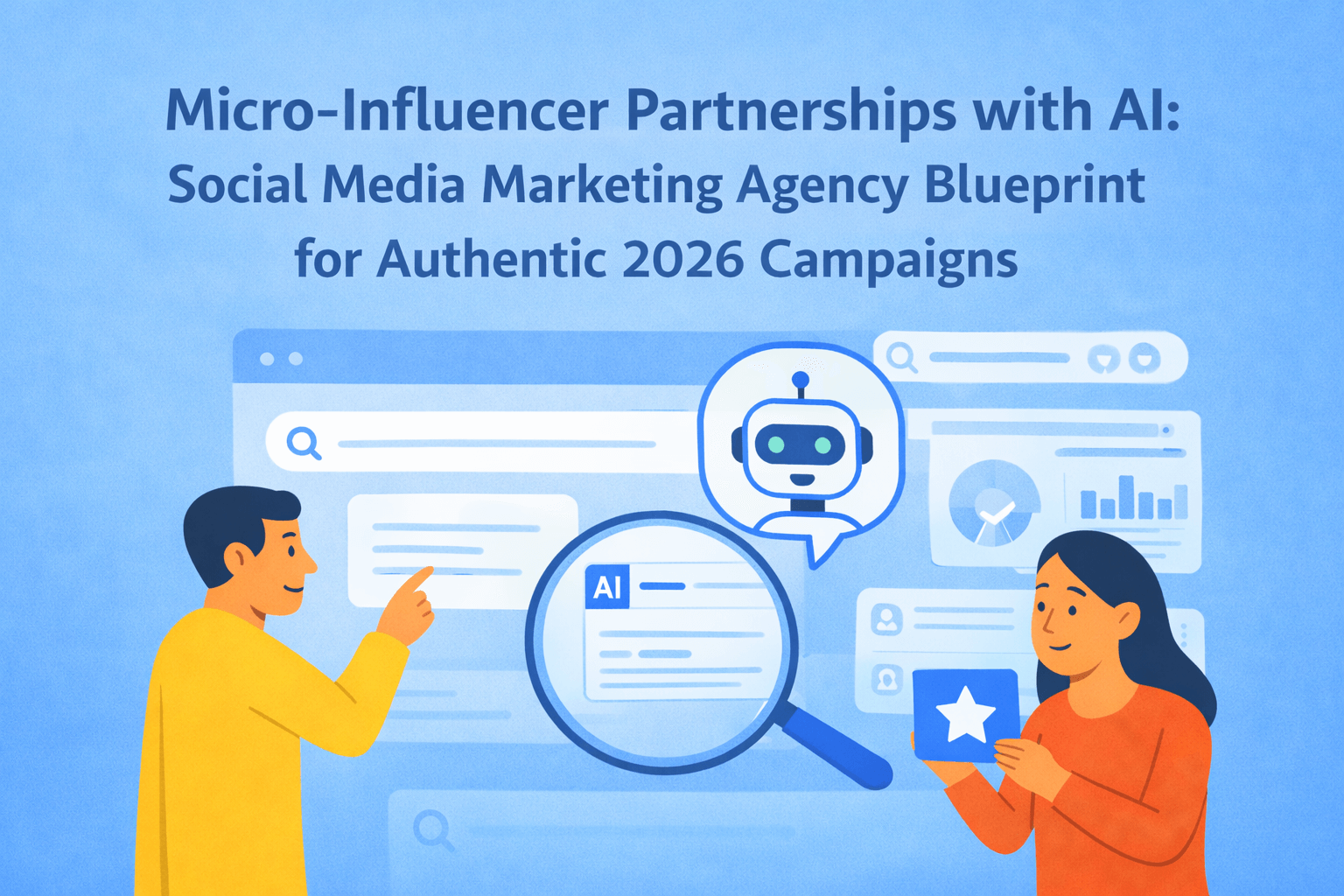
Influencer marketing strategies have been significantly reshaped by the adoption of artificial intelligence. Now, over 60% of brands rely on AI to discover suitable influencers, forecast campaign outcomes and refine overall performance. For any social media marketing agency seeking competitive advantage, AI integration is no longer optional—it is essential.
AI-Powered Influencer Discovery
Traditional influencer discovery required countless hours of manual research. AI has revolutionised this process through advanced algorithms that evaluate content quality, audience authenticity and brand alignment simultaneously.
Modern AI platforms analyse millions of influencer profiles, filtering by niche, engagement rate, audience demographics and location. Rather than relying on historical tags or clicks, sophisticated systems use large language models to evaluate content contextually, understand audience composition and identify genuine brand matches.
At Leadtap, we leverage these AI capabilities to streamline discovery whilst maintaining the human insight that distinguishes exceptional campaigns from adequate ones.
Predictive Analytics for Campaign Success
AI-driven predictive analytics enable agencies to forecast campaign performance before launch. By combining sentiment analysis, audience behaviour modelling and historical influencer data, these systems estimate engagement and conversion potential with remarkable accuracy.
This predictive capability transforms budget allocation decisions. Rather than distributing resources evenly across influencers, agencies can concentrate investment on partnerships most likely to deliver returns—reducing waste and maximising impact.
Fraud Detection and Audience Verification
With an estimated one in four influencers having purchased fake followers, authenticity verification has become critical. AI-powered fraud detection spots suspicious patterns that human review might miss: irregular engagement spikes, bot-like commenting behaviour and artificially inflated metrics.
Nothing torpedoes campaign credibility faster than discovering an influencer partnership was built on fraudulent foundations. AI verification protects both agency reputation and client investment.
Building Long-Term Partnership Frameworks
The transactional one-off sponsorship has lost its effectiveness. Influencer marketing in 2026 centres on forging lasting relationships that unfold over months or years. Research reveals that 79% of influencers prefer long-term brand partnerships, with only 2% favouring single campaigns.
From Transactions to Relationships
Long-term partnerships benefit all stakeholders. Brands gain consistent advocacy from trusted voices. Influencers enjoy reliable income and deeper brand understanding. Audiences receive authentic recommendations from creators who genuinely use and believe in products.
Creative Freedom as Strategy
Building authenticity requires relinquishing creative control. Rather than dictating exact messaging, successful agencies hand over creative reins to influencers who understand their audiences intimately.
This approach delivers dual benefits: it reduces production burden on brands whilst ensuring endorsements feel natural and genuine. Scripted content invariably underperforms organic integration, regardless of production quality.
Contractual Frameworks That Work
Effective partnership agreements balance brand protection with influencer autonomy. Key elements include:
- Clear deliverable expectations without prescriptive creative mandates
- Realistic timelines that accommodate influencer content calendars
- Fair compensation structures that recognise long-term value
- Exclusivity clauses proportionate to partnership scope
- Performance incentives aligned with measurable outcomes.
Platform Strategy for Maximum Impact
Whilst Instagram remains the core platform for micro-influencer collaboration, a sophisticated social media marketing agency must develop cross-platform expertise to maximise campaign reach and effectiveness.
Instagram: The Foundation
Instagram’s combination of photos, videos (reels), stories and shopping features provides an unmatched toolkit for brand collaborations. Reels now comprise 30% of creator content, offering algorithmic reach advantages for both influencers and brands.
The platform’s shopping integration transforms content consumption into purchasing action, creating measurable conversion pathways that justify influencer investment.
TikTok: Discovery Engine
TikTok continues fuelling product discovery and trend creation amongst younger demographics. Short-form video dominates, particularly content blending education with entertainment. For brands targeting Gen Z and younger Millennials, TikTok micro-influencer partnerships deliver exceptional awareness and engagement.
LinkedIn: B2B Breakthrough
B2B brands have finally recognised influencer marketing’s potential. LinkedIn’s short-form video feature has enabled connections with decision-makers, thought leaders and industry experts. For professional services and enterprise solutions, LinkedIn micro-influencers—often termed “thought leaders”—offer credibility that consumer platforms cannot match.
Emerging Platforms
Forward-thinking agencies monitor emerging platforms like BeReal and Lemon8, which attract younger users seeking alternatives to established networks. Early partnership development on nascent platforms can yield significant first-mover advantages.
Measurement and Attribution Excellence
Sophisticated measurement distinguishes professional campaigns from amateur efforts. Rather than aiming vaguely for “brand awareness”, effective strategies define specific success metrics: percentage increases in website traffic, user-generated content volumes, email subscriber acquisitions or direct sales attributable to influencer activity.
Tracking Infrastructure
Robust attribution requires dedicated tracking mechanisms for each creator partnership:
- Unique promotional codes enabling direct sales attribution
- Custom UTM parameters tracking traffic sources precisely
- Dedicated landing pages isolating influencer-driven conversions
- Pixel implementation measuring post-click behaviour.
Beyond Immediate Metrics
The long-term value of authentic user-generated content often exceeds immediate campaign returns. Micro-influencer content continues driving engagement and conversions long after initial posting. Top-performing content warrants repurposing across owned channels, email marketing integration and website product page features.
A strategic agency approaches measurement holistically, evaluating both immediate campaign performance and sustained brand equity development.
Compliance and Transparency Requirements
Regulatory scrutiny of influencer marketing has intensified globally. The FTC (US), CMA (UK), and ASCI (India) all mandate clear disclosure of paid partnerships. Non-compliance risks substantial fines and reputational damage.
Disclosure Best Practices
All sponsored content must include unambiguous disclosure—hashtags like #ad or #sponsored placed prominently within posts. Buried disclosures or ambiguous language violate both regulatory requirements and audience trust.
Transparency as Brand Asset
Beyond regulatory compliance, transparency has become a brand differentiator. Audiences increasingly reward honesty, dismissing brands perceived as deceptive. Clear partnership disclosure, counterintuitively, enhances rather than diminishes influencer credibility.
The AI-Human Balance
Success in 2026 micro-influencer marketing requires balancing artificial intelligence efficiency with irreplaceable human judgment. AI excels at data processing, pattern recognition and operational scaling. Humans excel at relationship building, creative strategy and authentic communication.
Where AI Leads
AI should drive influencer discovery, audience verification, performance prediction and campaign optimisation. These data-intensive tasks benefit from algorithmic precision and processing speed no human team can match.
Where Humans Lead
Relationship cultivation, creative direction, brand storytelling and crisis management remain fundamentally human domains. Leadtap maintains this balance deliberately, deploying AI to enhance human capability rather than replace human judgement.
Conclusion: The Integrated Future
The micro-influencer landscape in 2026 rewards agencies that embrace both technological advancement and authentic human connection. AI provides the analytical foundation—identifying ideal partners, predicting outcomes and optimising performance. Authentic relationships deliver the emotional resonance that transforms passive viewers into active customers.
For brands seeking genuine engagement over superficial metrics, micro-influencer partnerships executed with AI precision and human insight represent the optimal path forward. The agencies that master this integration will define the industry’s future.