The distinction between online and offline retail has never been more blurred. With 98% of customers now searching online for nearby businesses and 76% of “near me” mobile searches leading to store visits within 24 hours, the stakes for retailers have never been higher. Today’s consumers navigate an average of 50 touchpoints before making a purchase, spanning both digital and physical channels. This seismic shift demands a sophisticated approach to local visibility—one that seamlessly connects digital discovery with in-store experiences.
For retailers operating across multiple channels, mastering local SEO is no longer optional. It makes the role of a local SEO agency increasingly critical in bridging online discovery with real-world footfall. Understanding how specialist agencies approach this challenge reveals the strategic frameworks that separate market leaders from those struggling to maintain visibility in an increasingly competitive landscape.
The Omnichannel Imperative: Why Local SEO Matters More Than Ever
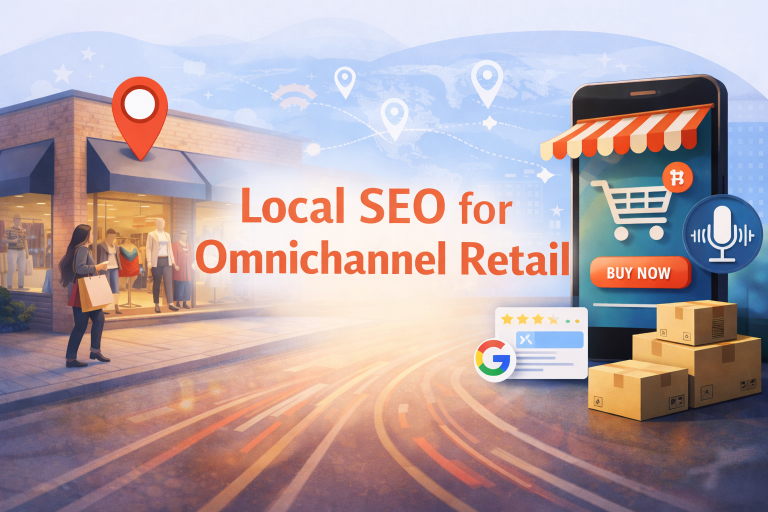
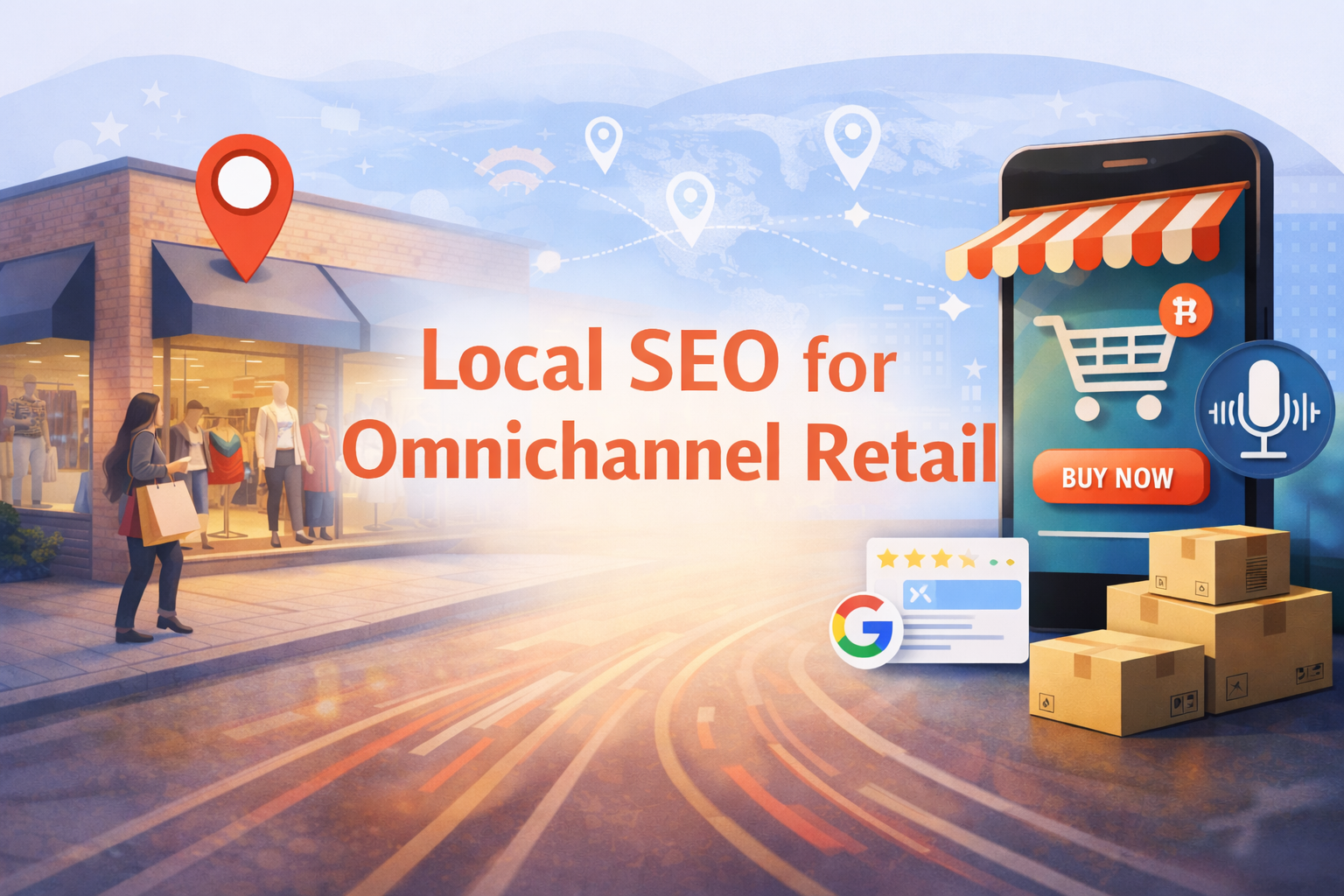
The modern retail journey defies traditional categorisation. A customer might discover a product through voice search, verify stock availability via Google Business Profile, compare reviews on their mobile device, and ultimately complete their purchase in-store. This complex web of interactions requires retailers to maintain consistent, optimised presence across every potential touchpoint.
The Convergence of Physical and Digital Commerce
Research indicates that 75% of shoppers use both digital and physical touchpoints during a single customer journey. This behaviour pattern fundamentally changes how local SEO agencies approach retail optimisation. Rather than treating online and offline as separate channels, leading practitioners now develop unified strategies that recognise and capitalise on these interconnected pathways.
The implications extend beyond mere visibility. Businesses with complete Google Business Profiles are 2.7 times more likely to be considered reputable, making customers 70% more likely to visit physical locations and 50% more likely to make purchases. These statistics underscore the commercial imperative of comprehensive local optimisation.
Understanding the Modern Consumer Journey
Contemporary consumers expect frictionless transitions between channels. They want to research online but touch products in-store. They expect click-and-collect options and seamless returns regardless of purchase channel. A local SEO agency that understands these expectations crafts strategies addressing each stage of this non-linear journey.
Google Business Profile: The Foundation of Local Visibility
At the heart of any effective local SEO strategy lies the Google Business Profile. Despite this opportunity, more than half of retailers (56%) still fail to claim or properly optimise their listings—effectively giving up valuable organic exposure while continuing to invest heavily in paid advertising.
Complete Profile Optimisation
Optimised profiles generate seven times more clicks than incomplete alternatives. For retail businesses, this translates directly to increased foot traffic and revenue. Comprehensive optimisation encompasses accurate NAP (Name, Address, Phone) details, business categories, operating hours and regular updates that signal ongoing activity to search algorithms.
Visual Content Strategy
Google’s AI now interprets images and videos more intelligently than ever, meaning visual content directly influences local rankings. Listings that feature more than 100 images generate dramatically higher engagement, delivering over 520% more calls and 1,065% more website clicks. For retailers, this presents an opportunity to showcase products, store environments, and brand personality through carefully curated imagery.
Leveraging New Features for Competitive Advantage
Under the 2026 algorithm changes, user engagement has become a stronger ranking influence than brand visibility, with actions such as photo interactions, review activity, Q&A participation and website clicks playing a more decisive role. Forward-thinking retailers leverage emerging features like augmented reality store tours and AI-generated Q&A systems to drive engagement and build trust before customers ever set foot in-store.
Voice Search Optimisation: Capturing “Near Me” Intent
Voice search has fundamentally altered local discovery patterns. With 76% of voice searches seeking nearby businesses and projections indicating that over half of all searches will be voice-based by 2026, retailers must adapt their optimisation strategies accordingly.
The Conversational Search Revolution
Voice queries differ markedly from typed searches. Users employ natural language patterns, asking questions rather than typing keywords. Search queries such as “Where’s the nearest place to buy running shoes?” or “Which electronics stores are currently open?” reflect a shift towards natural, conversational language—making it essential for content to be optimised for user intent rather than relying on traditional keyword density alone.
Technical Requirements for Voice Visibility
Voice search results typically load in an average of 4.6 seconds—significantly faster than standard websites. Retailers must prioritise Core Web Vitals performance, mobile-first design and HTTPS security to remain competitive. LocalBusiness and FAQ schema markup, validated through rich results testing tools, improves eligibility for featured snippets that voice assistants read aloud.
Integration with Google Business Profile
For voice SEO, the Google Business Profile serves as the primary information source for virtual assistants. Ensuring complete accuracy across all fields—particularly business hours and location details—directly impacts voice search visibility and the likelihood of capturing time-sensitive queries.
Local Inventory Ads: Bridging Online Discovery and In-Store Purchase
Local Inventory Ads represent one of the most powerful tools for connecting digital search behaviour with physical retail outcomes. These advertisements showcase real-time product availability to nearby shoppers, directly addressing the modern consumer’s expectation of inventory transparency.
Real-Time Product Visibility
When customers search for products via Google Search, Maps or Google Assistant, Local Inventory Ads display stock information at local stores. This capability transforms online searches into in-store visits, with retailers using these ads alongside Shopping ads experiencing 21% increases in store visits and 9% improvements in online conversions.
Strategic Implementation
Effective Local Inventory Ads require integration between inventory management systems and Google Merchant Centre. Real-time feed synchronisation ensures accuracy—nothing damages consumer trust faster than discovering advertised products are actually unavailable. NAP consistency across all platforms helps search engines verify business legitimacy, improving ad placement for high-intent local queries.
Optimisation Best Practices
Leadtap recommends implementing bid adjustments to increase visibility for nearby shoppers and during operating hours. Attributes highlighting “Pick up in store” and “Pick up today” options appeal to consumers seeking immediate gratification whilst driving in-store traffic where additional purchases often occur.
Multi-Location SEO: Scaling Local Presence
Retailers operating multiple locations face unique challenges in maintaining consistent yet locally relevant optimisation across their footprint. Hyper-local targeting—focusing on specific neighbourhoods and communities—allows businesses to compete effectively in each micro-market.
Location-Specific Content Strategy
Each physical location warrants dedicated landing pages featuring unique content relevant to that specific area. This approach signals relevance to local search algorithms whilst providing valuable information to customers searching for nearby options. References to local landmarks, neighbourhood names and community characteristics strengthen local associations.
Consistent NAP Management
Citation consistency across directories, social platforms and the primary website remains fundamental. Discrepancies between listings confuse search algorithms and erode consumer trust. Automated monitoring tools help identify and correct inconsistencies before they impact visibility.
Review Strategy Across Locations
Review acquisition and response protocols must scale across all locations whilst maintaining authentic local engagement. Encouraging customers to mention specific services and locations in reviews naturally incorporates relevant keywords whilst building social proof that influences purchase decisions.
Building an Integrated Omnichannel Strategy
Success in 2026’s retail environment requires abandoning siloed approaches in favour of unified commerce strategies. This means streamlining operations so that selling across channels becomes seamless, reducing platform costs and eliminating the patchy middleware traditionally associated with omnichannel retail.
Emerging Technologies and AI Integration
The landscape of local search continues evolving rapidly. IoT devices create new discovery channels, whilst AI-generated search experiences reshape how information appears to consumers. At the same time, Google’s AI Overviews are appearing more frequently within search results, combining insights drawn from a range of online sources into a single, summarised response. Retailers must ensure their content provides clear, authoritative answers to common queries—positioning themselves as sources that AI systems draw upon when generating responses.
Smart home devices, connected vehicles and wearables represent emerging platforms for local discovery. As in-car voice assistants become mainstream, nearly 62% of drivers now rely on them to locate nearby businesses, driving a 200% year-on-year increase in automotive-related retail searches. Meanwhile, AR capabilities within Google Business Profiles allow customers to explore retail spaces virtually before visiting—particularly valuable for hospitality, fashion and home furnishing retailers.
Unified Customer Experience
From discovery through purchase and returns, customers expect consistency. Buy Online, Pick Up In-Store (BOPIS) and Buy Online, Return In-Store (BORIS) options demand backend systems that support seamless execution. Leadtap helps retailers develop the technical infrastructure and local visibility required to promote these capabilities effectively.
Data-Driven Optimisation and Personalisation
Continuous monitoring of local search metrics, conversion rates and attribution data enables ongoing refinement. Understanding which channels drive discovery versus conversion, and how customers move between touchpoints, informs resource allocation and strategy development. Consumer expectations for personalised experiences continue rising, with location-based targeting and behavioural data enabling retailers to deliver relevant messaging at each stage of the journey.
The complexity of modern omnichannel retail demands expertise that spans technical SEO, local optimisation, content strategy and emerging technology integration. As traffic to retail websites from generative AI sources surged nearly 4,700% year-over-year by mid-2025, analysts expect this figure to climb to well over 8,000% by early 2026 as AI-driven discovery becomes embedded in everyday local search behaviour.
Leadtap brings together the strategic insight and technical capability required to navigate this evolving landscape. Through comprehensive Google Business Profile management, voice search optimisation, Local Inventory Ads implementation and multi-location strategies, retailers can bridge the gap between digital discovery and physical experience—capturing customers at every stage of their increasingly complex journeys.
The retailers who thrive in 2026 and beyond will be those who recognise that local SEO is not merely about rankings, but about creating seamless pathways from online intent to in-store satisfaction. The strategies outlined here provide the foundation for building that competitive advantage.