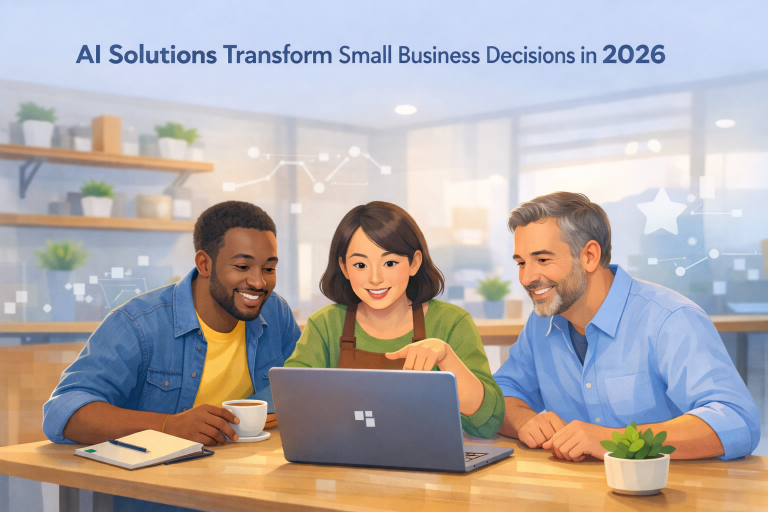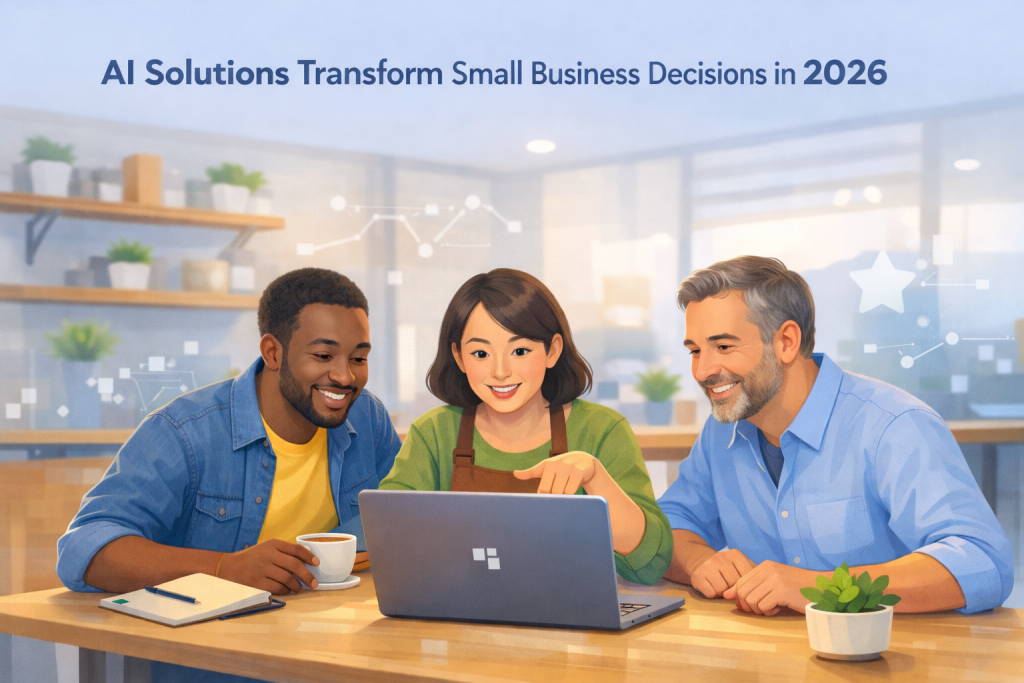
Small businesses are experiencing a groundbreaking shift in how they approach decision-making, thanks to resource-efficient AI solutions that once required enterprise-level budgets. With 75% of small businesses already investing in AI and costs dropping to levels lower than monthly coffee expenses, 2026 marks the year when intelligent automation becomes truly accessible to every entrepreneur. This democratisation of artificial intelligence is fundamentally changing how smaller enterprises compete, operate and grow in an increasingly data-driven marketplace.
The transformation extends far beyond simple task automation, encompassing sophisticated decision support systems that rival those used by multinational corporations. Small business owners can now access predictive analytics, autonomous agents and real-time business intelligence without requiring dedicated IT departments or substantial capital investments. As these AI solutions continue to evolve, they’re creating unprecedented opportunities for agile, data-driven decision-making at every level of business operations.
The Democratisation of AI Solutions for Small Business Operations
The barriers that once separated small businesses from enterprise-grade artificial intelligence have crumbled dramatically. Where complex implementations previously demanded significant resources and technical expertise, today’s resource-efficient AI models operate seamlessly within existing business frameworks.
How Smaller, More Efficient AI Models Are Breaking Cost Barriers
Modern AI architectures have undergone revolutionary changes, with embedded systems requiring minimal computing resources whilst delivering maximum operational impact. These multimodal systems run more efficiently than their predecessors, processing multiple data types simultaneously without overwhelming small business infrastructure. The technological advancement means that sophisticated AI solutions can operate on standard hardware, eliminating the need for expensive server farms or cloud computing contracts.
The efficiency gains stem from improved algorithms that compress complex decision-making processes into streamlined operations. Small businesses can now deploy intelligent systems that analyse customer behaviour, predict inventory needs and optimise pricing strategies using nothing more than a standard computer and internet connection. This accessibility has transformed artificial intelligence from a luxury reserved for large corporations into an essential tool for competitive small business operations.
The Shift from Enterprise-Only to Coffee-Budget Accessibility
The cost revolution in AI technology has made sophisticated business intelligence tools available at price points that rival monthly utility bills. Small business automation solutions now operate within budgets that previously couldn’t accommodate basic software subscriptions, creating opportunities for widespread adoption across diverse industries.
This affordability has catalysed rapid market penetration, with 75% of small businesses now actively investing in some form of artificial intelligence. The economic accessibility means that neighbourhood retailers, local service providers and small manufacturing operations can access the same decision support capabilities that once provided competitive advantages exclusively to large enterprises. Leadtap has observed this trend accelerating throughout 2025, with clients discovering remarkable returns on modest AI investments across various sectors.
Autonomous AI Agents: The Game-Changer for Routine Business Operations
The emergence of autonomous AI agents represents perhaps the most significant advancement in small business automation, transforming how routine operations are managed and executed. These intelligent systems operate independently whilst maintaining alignment with business objectives and strategic priorities.
Understanding How Autonomous Agents Make Independent Decisions
Autonomous agents function through sophisticated frameworks of predefined parameters that enable independent operation without constant human oversight. These systems analyse incoming data streams, evaluate options against established criteria and execute decisions that align with business goals. The technology operates continuously, monitoring market conditions, customer interactions and operational metrics to identify opportunities and potential challenges before they impact business performance.
The decision-making process incorporates machine learning algorithms that adapt to changing conditions whilst maintaining consistency with established business policies. Small enterprises benefit from 24/7 operational intelligence that responds to customer inquiries, adjusts inventory levels and optimises resource allocation without requiring manual intervention. This capability essentially provides small businesses with the equivalent of a dedicated operations team working around the clock.
Real-World Applications in Customer Data and Inventory Management
Practical implementations of autonomous agents demonstrate remarkable versatility across various business functions. Customer data analysis occurs in real-time, identifying purchasing patterns, preferences and engagement opportunities that inform personalised marketing strategies. Inventory management systems automatically adjust stock levels based on seasonal trends, supplier reliability and demand forecasting, preventing both overstock and stockout situations.
The applications extend to pricing optimisation, where agents continuously analyse competitor activity, market demand and profit margins to suggest optimal pricing strategies. Small businesses report improved margins and increased customer satisfaction as these systems balance competitive positioning with profitability requirements.
The Learning Loop: How AI Agents Improve Over Time
The continuous learning capabilities of modern AI agents create compounding value for small businesses willing to invest in these technologies. Each transaction, customer interaction and operational decision contributes data that refines future performance. The systems develop an increasingly sophisticated understanding of business-specific patterns and market dynamics.
This learning process means that AI solutions become more valuable over time, adapting to seasonal fluctuations, customer behaviour changes and market evolution without requiring manual reconfiguration. Small businesses essentially develop customised intelligence systems that understand their unique operational requirements and market positions better than any off-the-shelf solution could provide.
Measuring the Impact: Operational Efficiency Statistics and ROI
The quantifiable benefits of resource-efficient AI implementation provide compelling evidence for widespread small business adoption. Performance metrics demonstrate consistent improvements across diverse operational areas.
The 90% Efficiency Improvement: What Small Businesses Are Experiencing
Current data reveals that 9 out of 10 small businesses using AI report improved operational efficiency, with many experiencing productivity gains that exceed initial expectations. These improvements manifest in reduced processing times, improved accuracy in forecasting and inventory management, and enhanced customer service responsiveness.
The efficiency gains compound over time, as autonomous systems handle increasing volumes of routine decisions, freeing human resources for strategic initiatives. Small businesses report being able to serve more customers, explore new market opportunities and develop innovative products and services whilst maintaining lean operational structures.
Calculating ROI on Resource-Efficient AI Investments
Return on investment calculations for small business AI implementations typically show positive results within months rather than years. The low initial costs combined with measurable efficiency improvements create favourable financial outcomes that justify continued investment in expanded AI capabilities.
Leadtap clients consistently report that their AI solution investments pay for themselves through reduced operational costs, improved customer satisfaction scores and increased revenue per customer. The accessibility of these technologies means that even modest efficiency improvements generate substantial returns relative to implementation costs.
Transforming Decision-Making: From Data Overwhelm to Actionable Insights
The transformation from reactive to proactive decision-making represents one of the most significant advantages of modern AI implementation for small businesses. These systems convert overwhelming data streams into clear, actionable insights that inform strategic decisions.
Eliminating the Need for Dedicated Data Analysis Expertise
Small businesses traditionally struggled with data analysis due to resource constraints and technical complexity. Modern AI solutions eliminate these barriers by providing business intelligence capabilities that require no specialised training or dedicated personnel. The systems present insights in accessible formats that enable immediate understanding and action.
This democratisation of data analysis means that small business owners can access the same quality of market intelligence and operational insights previously available only to enterprises with dedicated analytics departments. Decision-making becomes more informed, timely and effective across all business functions.
Speed and Quality: How AI Solutions Accelerate Business Decisions
The acceleration of decision-making processes through AI support enables small businesses to respond rapidly to market opportunities and challenges. Real-time analysis of customer behaviour, market trends and operational performance provides immediate insights that inform strategic choices.
Quality improvements in decision-making stem from the comprehensive analysis capabilities of modern AI systems, which consider multiple variables simultaneously and identify patterns that might escape human observation. Small businesses benefit from more nuanced understanding of their markets, customers and operational efficiency opportunities.
Creating Strategic Space for Innovation and Relationship-Building
By automating routine decision-making processes, AI solutions free human resources for activities that require creativity, emotional intelligence and strategic thinking. Small business owners can focus on innovation, customer relationship development and strategic planning whilst AI systems manage operational details.
This shift enables small businesses to compete more effectively against larger organisations by leveraging human creativity and personal service whilst maintaining operational efficiency through intelligent automation. The combination creates sustainable competitive advantages that scale with business growth.
Strategic Implementation: Selecting the Right AI Solutions for Maximum Impact
Successful AI implementation requires strategic selection of tools and technologies that align with specific business objectives and operational requirements. The abundance of available options makes careful evaluation essential for optimal results.
Focusing on Speed, Quality and Decision-Making Enhancement
Effective AI tool selection prioritises solutions that demonstrably improve decision-making speed, quality and consistency. Small businesses should evaluate potential implementations based on their ability to address specific operational challenges whilst integrating seamlessly with existing workflows.
The focus should remain on measurable improvements in business performance rather than technological sophistication for its own sake. Tools that enhance customer service, improve inventory management or optimise pricing strategies typically provide more immediate value than complex systems requiring extensive customisation.
Avoiding Complexity Whilst Maximising Operational Benefits
Successful small business AI implementation balances functionality with usability, avoiding unnecessarily complex systems that require extensive training or maintenance. The most effective solutions operate transparently, providing valuable insights and automation without disrupting established business processes.
Leadtap recommends focusing on AI tools that enhance rather than replace human decision-making capabilities, ensuring that business owners maintain control over strategic direction whilst benefiting from improved operational intelligence. This approach maximises benefits whilst minimising implementation risks and ongoing complexity.
Building Scalable AI Frameworks for Growing Businesses
Forward-thinking small businesses design AI implementations that can grow and evolve with their operational requirements. Scalable frameworks accommodate increased transaction volumes, expanded product lines and additional market segments without requiring complete system replacement.
The investment in flexible, scalable AI solutions creates long-term value that supports business growth whilst maintaining operational efficiency. Small businesses can start with focused implementations and gradually expand capabilities as their needs evolve and their understanding of AI benefits deepens.
Future-Proofing Your Business: AI Solutions Trends Through 2026
The continued evolution of AI technology promises even greater opportunities for small business transformation. Understanding emerging trends enables strategic positioning for future competitive advantages.
Emerging Technologies in Resource-Efficient AI
Upcoming developments in multimodal AI systems will provide even more comprehensive business intelligence capabilities whilst maintaining the resource efficiency that makes them accessible to small businesses. These advances promise improved accuracy, expanded analytical capabilities and enhanced integration with existing business systems.
The evolution toward more sophisticated autonomous agents will enable small businesses to automate increasingly complex decision-making processes whilst maintaining strategic control over business direction. These developments will further level the competitive playing field between small enterprises and larger organisations.
Preparing for the Next Wave of Business Intelligence Tools
Small businesses that establish strong foundations in AI utilisation now will be better positioned to adopt advanced capabilities as they become available. The learning curve for AI implementation means that early adopters will have significant advantages when next-generation tools reach market maturity.
Strategic preparation involves building internal familiarity with AI concepts, establishing data collection and management practices that support AI implementation, and developing service frameworks that can accommodate evolving technological capabilities. This preparation ensures that businesses can quickly capitalise on new opportunities as they emerge.
Conclusion
Resource-efficient AI solutions are not just transforming small business decision-making—they’re levelling the playing field between small enterprises and larger competitors. By embracing these accessible, intelligent tools now, small businesses can harness the power of data-driven insights whilst focusing their human talent on what matters most: innovation, growth and building meaningful customer relationships. The democratisation of artificial intelligence represents one of the most significant opportunities for small business advancement in recent history, offering competitive advantages that were unimaginable just a few years ago. As we progress through 2026, the businesses that successfully integrate these technologies will establish sustainable advantages that support long-term growth and success in an increasingly competitive marketplace.
Sources
- Source 1: 75% of small businesses already investing in AI – US Chamber of Commerce 2026 Report
- Source 2: 9 out of 10 small businesses using AI report improved operational efficiency – US Chamber of Commerce