The digital marketing landscape has evolved dramatically, yet many businesses still evaluate agencies based on vanity metrics like follower counts and basic rankings. In 2026, choosing the right digital marketing agency requires deeper scrutiny of their strategic approach, technological capabilities and alignment with your business objectives.
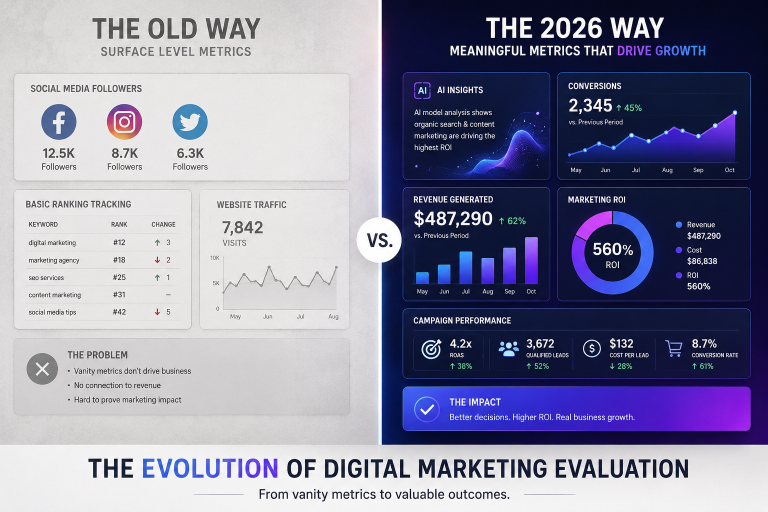
Gone are the days when impressive social media numbers or top Google rankings alone indicated an agency’s worth. Today’s sophisticated marketplace demands partners who can demonstrate genuine business impact through AI-powered strategies, data-driven insights and measurable ROI. The agencies that truly deliver results focus on conversion optimisation, customer lifetime value, and strategic growth rather than surface-level metrics that look impressive but don’t drive revenue.
Why Traditional Agency Selection Criteria Fall Short in 2026
The Vanity Metrics Trap
Many businesses fall into the vanity metrics trap when evaluating potential agency partners. High follower counts, impressive-looking engagement rates and top search rankings can create an illusion of success without translating to actual business growth. These metrics often mask underlying issues such as poor audience quality, irrelevant traffic or engagement from bot networks.
The reality is that a smaller, highly engaged audience of qualified prospects delivers significantly more value than millions of followers who never convert. Similarly, ranking #1 for keywords that don’t generate leads or sales represents wasted effort and resources. Modern businesses need agencies that understand the difference between visibility and profitability.
How Industry Evolution Changed the Game
The digital marketing industry has undergone a fundamental transformation driven by artificial intelligence, privacy regulations and increasingly sophisticated consumer behaviour. Traditional approaches that worked five years ago now struggle to deliver consistent results in today’s competitive landscape.
Advanced algorithms, first-party data strategies and AI-powered personalisation have become essential components of successful campaigns. Agencies that haven’t evolved their methodologies risk delivering outdated strategies that fail to maximise your investment. The most effective partners combine human creativity with machine learning capabilities to deliver campaigns that adapt and optimise in real-time.
Essential Questions About Their Strategic Framework
Business Alignment and Goal Setting
The foundation of any successful agency partnership lies in strategic alignment with your business objectives. Ask potential agencies how they approach the discovery phase and what processes they use to understand your unique challenges, opportunities and market position. A quality digital marketing agency should demonstrate a structured methodology for translating business goals into measurable marketing outcomes.
Enquire about their experience with businesses similar to yours, not just in industry but in size, growth stage and market dynamics. Understanding how they’ve helped comparable organisations navigate similar challenges provides insight into their strategic thinking and practical experience. The best agencies don’t offer one-size-fits-all solutions but instead develop customised approaches based on thorough analysis of your specific situation.
Competitive Analysis and Market Understanding
Effective marketing strategies require deep understanding of your competitive landscape and market positioning. Ask agencies how they conduct competitive analysis and what tools they use to monitor market trends, competitor activities and emerging opportunities. Their response should demonstrate systematic approaches to gathering intelligence and translating insights into actionable strategies.
The most valuable agencies don’t just analyse what competitors are doing today but identify gaps and opportunities that others have missed. They should be able to articulate how their proposed strategies will differentiate your brand and capture market share through innovative approaches rather than simply copying successful competitors.
Evaluating Their Technology Stack and AI Capabilities
AI-Powered Tools and Automation
In 2026, artificial intelligence isn’t optional – it’s essential for competitive digital marketing. Evaluate agencies based on their AI capabilities, including predictive analytics, automated optimisation, personalisation engines and intelligent content creation tools. Ask specific questions about how they leverage machine learning to improve campaign performance and reduce manual inefficiencies.
Understanding their approach to marketing automation reveals their sophistication level and ability to scale your campaigns effectively. The best agencies combine AI-powered tools with human expertise to create campaigns that continuously learn and improve. They should demonstrate how automation enhances rather than replaces strategic thinking and creative execution.
Data Integration and Analytics Platforms
Modern marketing success depends on seamless data integration across multiple touchpoints and platforms. Agencies should articulate how they connect data from various sources to create comprehensive customer journey insights and attribution models. This integration capability directly impacts their ability to optimise campaigns and demonstrate ROI across all marketing channels.
Ask about their experience with customer data platforms, advanced analytics tools and custom dashboard development. The most effective agencies don’t just collect data – they transform it into actionable insights that drive strategic decisions and continuous improvement. Their analytics capabilities should support both tactical optimisation and strategic planning initiatives.
Assessing Team Expertise and Service Integration
Cross-Functional Team Capabilities
Successful digital marketing requires seamless integration across multiple disciplines including SEO, social media marketing, web development, paid advertising and content creation. Evaluate how agencies structure their teams and ensure collaboration between specialists. Siloed approaches that treat each channel independently often miss valuable synergies and optimisation opportunities.
The strongest agencies maintain teams with complementary expertise who regularly collaborate on strategy development and execution. Ask about their internal communication processes, project management methodologies and how they ensure consistent messaging and optimisation across all channels. Leadtap exemplifies this integrated approach by combining AI solutions with comprehensive digital marketing services under unified strategic direction.
Specialist Knowledge Areas
While integration is crucial, deep expertise in specific areas remains equally important. Assess whether the agency team includes certified specialists in relevant platforms and technologies. Industry certifications, continuous learning programmes and thought leadership activities indicate commitment to maintaining cutting-edge expertise.
Consider the agency’s track record with emerging technologies and their ability to adapt strategies as platforms and algorithms evolve. The best teams balance proven expertise with curiosity and willingness to experiment with new approaches that could provide competitive advantages.
Performance Measurement and ROI Accountability
KPI Selection and Measurement
The most critical aspect of agency evaluation involves understanding how they define and measure success. Move beyond vanity metrics to focus on KPIs that directly correlate with business outcomes such as lead quality, customer acquisition cost, lifetime value and revenue attribution. Agencies should demonstrate sophisticated approaches to measurement that account for complex customer journeys and multi-channel interactions.
Ask potential partners how they develop custom KPI frameworks based on your specific business model and goals. Their measurement approach should evolve as your business grows and objectives shift. The best agencies proactively suggest new metrics and measurement techniques that provide deeper insights into campaign effectiveness and optimisation opportunities.
Reporting and Transparency Standards
Transparency in reporting builds trust and enables informed decision-making. Evaluate agencies based on their reporting frequency, detail level and ability to explain complex data in accessible terms. Regular, comprehensive reports should include both tactical performance metrics and strategic insights that inform future planning.
Advanced agencies provide real-time dashboard access and customised reporting that focuses on the metrics most relevant to your role and responsibilities. They should demonstrate clear attribution methodologies and honest assessment of what’s working, what isn’t, and why. This transparency enables collaborative optimisation and strategic refinement over time.
Future-Proofing Your Partnership
Adaptability and Innovation Approach
The digital marketing landscape continues evolving rapidly, requiring agency partners who stay ahead of industry changes rather than simply reacting to them. Evaluate agencies based on their innovation pipelines, early adoption of emerging technologies and thought leadership in industry developments.
Ask about their processes for evaluating new platforms, tools and strategies. The most valuable agencies balance proven approaches with strategic experimentation that could provide competitive advantages. Leadtap demonstrates this forward-thinking approach through their AI-first methodology and continuous integration of cutting-edge technologies.
Long-Term Partnership Value
Consider agencies as long-term strategic partners rather than short-term service providers. Evaluate their ability to scale services as your business grows, adapt strategies as markets evolve, and maintain consistent performance across different economic conditions. The best partnerships create compounding value over time through deep institutional knowledge and strategic continuity.
Contract flexibility and partnership evolution capabilities indicate agencies’ commitment to long-term success rather than short-term revenue maximisation. Look for partners who invest in understanding your industry, competitive landscape and growth trajectory to provide increasingly sophisticated strategic guidance over time.
Conclusion
Selecting the right digital marketing agency in 2026 requires moving beyond surface-level metrics to evaluate strategic thinking, technological sophistication and genuine partnership potential. The agencies that thrive will be those that demonstrate clear ROI accountability, AI-powered capabilities and a deep understanding of your business objectives.
Success in today’s competitive landscape demands partners who combine human creativity with artificial intelligence, strategic thinking with tactical execution, and proven methodologies with innovative approaches. By asking the right questions and evaluating agencies based on substantive criteria rather than vanity metrics, you’ll identify partners capable of driving meaningful business growth.
The investment in thorough agency evaluation pays dividends through improved campaign performance, strategic alignment and long-term partnership value. Take time to assess potential partners comprehensively – your future success depends on choosing agencies that understand both current best practices and emerging opportunities in the evolving digital marketing landscape.