The era of machine intelligence has hit a critical stage, where 83% of firms state AI is a top goal, but just 39% have truly deployed AI solutions that provide clear financial gains. For growing businesses, the gap between AI promises and practical implementation can feel overwhelming. You’re bombarded with vendor pitches about transformative AI capabilities whilst struggling to understand which solutions actually align with your business needs and budget constraints.
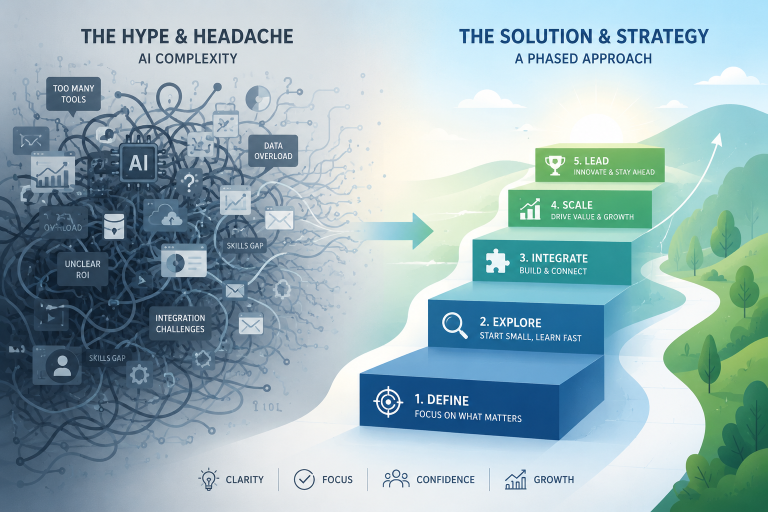
The truth is, successful AI implementation doesn’t require a complete digital transformation overnight. Instead, it demands a strategic, phased approach that builds on your existing infrastructure whilst delivering tangible value at each stage. This guide provides a practical roadmap for integrating AI solutions into your operations without the typical implementation headaches that plague 60% of AI projects.
Whether you’re exploring automation opportunities or considering advanced analytics, the key lies in understanding your readiness level, prioritising quick wins and building a foundation for long-term success. Let’s cut through the marketing noise and focus on what actually works for businesses in your growth phase.
The Reality Check: What AI Solutions Actually Mean for Growing Businesses
Separating AI Hype from Practical Applications
AI solutions for growing businesses aren’t about replacing human workers with robots or implementing complex machine learning algorithms from day one. Instead, they focus on practical applications that enhance existing processes and deliver immediate value. Think automated customer service responses, intelligent lead scoring systems or predictive inventory management rather than futuristic AI assistants.
The most successful implementations involve narrow AI applications that solve specific business problems. For instance, chatbots that handle 70% of routine customer enquiries, or marketing automation platforms that personalise email campaigns based on user behaviour. These tools integrate seamlessly with existing workflows whilst providing measurable improvements in efficiency and customer experience.
Why Most AI Implementations Fail (And How to Avoid These Pitfalls)
Research indicates that 67% of AI projects fail to move beyond the pilot phase, primarily due to unrealistic expectations and inadequate preparation. The most common pitfalls include attempting to implement too many solutions simultaneously, underestimating data quality requirements, and failing to secure proper stakeholder buy-in.
Successful implementations start with clear objectives and realistic timelines. Rather than pursuing AI for its own sake, focus on specific business outcomes such as reducing response times by 50% or increasing lead conversion rates by 25%. This outcome-driven approach ensures your AI solutions directly contribute to business growth rather than becoming expensive technological experiments.
Assessing Your Business Readiness for AI Solutions
Data Infrastructure: The Foundation You Need First
Prior to launching any AI projects, you must have tidy, available data systems. Most AI applications require consistent data inputs to function effectively, which means auditing your current data collection processes across all customer touchpoints. This includes website analytics, CRM systems, email marketing platforms and social media channels.
Your data should be centralised, regularly updated and free from duplications or errors. If you’re currently managing customer information across multiple spreadsheets or disconnected systems, addressing these infrastructure gaps becomes your first priority. Consider implementing a robust CRM system or data management platform before exploring advanced AI applications.
Budget Considerations Beyond Software Costs
AI implementation costs extend far beyond initial software licensing fees. Factor in data preparation expenses, staff training requirements, integration costs with existing systems and ongoing maintenance. A typical AI solution implementation can cost 3-5 times the initial software price when accounting for these additional expenses.
Plan for a phased budget approach that spreads costs across 12-18 months rather than expecting immediate returns. This allows for proper testing, optimisation and scaling without overwhelming your cash flow. Many growing businesses find success starting with AI-powered tools that offer monthly subscription models rather than large upfront investments.
Team Skills and Change Management Requirements
AI adoption requires both technical skills and cultural adaptation within your organisation. Assess your team’s current digital literacy levels and identify training needs before implementation begins. Even user-friendly AI tools require understanding of data interpretation, performance monitoring and optimisation techniques.
Equally important is managing the psychological aspects of AI adoption. Address concerns about job displacement by positioning AI as a tool that enhances human capabilities rather than replacing them. Create clear communication channels for feedback and ensure all stakeholders understand how AI solutions support their specific roles and responsibilities.
The Strategic Hierarchy: Which AI Solutions to Implement First
Quick Wins: AI Tools for Immediate Impact
Start with AI solutions that deliver immediate, visible results whilst requiring minimal technical expertise. Customer service chatbots top this list, capable of handling routine enquiries 24/7 whilst freeing your team for complex customer issues. Modern chatbot platforms require minimal coding knowledge and integrate easily with existing websites and social media channels.
Email marketing automation represents another quick win, with AI-powered platforms that personalise content based on user behaviour, optimal send times and engagement patterns. These tools typically show ROI within 3-6 months through improved open rates and conversion metrics. Social media scheduling tools with AI-driven content recommendations also provide immediate efficiency gains for marketing teams.
Medium-Term Implementations for Operational Efficiency
Once foundational AI tools are established, focus on solutions that optimise core business processes. Predictive analytics for sales forecasting helps growing businesses manage inventory, staffing and cash flow more effectively. These systems analyse historical data patterns to predict future trends with 85-90% accuracy rates.
Lead scoring systems represent another valuable medium-term implementation, automatically ranking prospects based on engagement levels, demographic data and behavioural indicators. This enables your sales team to prioritise high-value opportunities whilst nurturing lower-scoring leads through automated sequences. Implementation typically requires 3-6 months but can increase conversion rates by 30-50%.
Advanced AI Solutions for Competitive Advantage
Advanced implementations focus on competitive differentiation through sophisticated personalisation and predictive capabilities. Recommendation engines that suggest products or services based on individual customer profiles, dynamic pricing algorithms that optimise margins in real-time and advanced analytics platforms that identify market opportunities before competitors.
These solutions require significant data infrastructure, technical expertise and longer implementation timelines. However, they provide sustainable competitive advantages and support premium pricing strategies. Consider these implementations once foundational and medium-term solutions are successfully deployed and optimised.
Building Your AI Implementation Roadmap
Phase 1: Basics and Early Success (Months 1-3)
Begin with data infrastructure assessment and quick-win implementations that demonstrate immediate value. Install chatbot solutions, implement basic marketing automation and establish data collection protocols across all customer touchpoints. Set baseline metrics for customer response times, lead generation costs, and operational efficiency measures.
During this phase, focus on team training and change management initiatives. Ensure all stakeholders understand new processes and feel confident using AI-powered tools. Establish regular review meetings to monitor progress, address concerns and celebrate early successes that build momentum for subsequent phases.
Phase 2: Integration and Optimisation (Months 4-9)
Expand AI capabilities through predictive analytics, advanced lead scoring and cross-platform integration. Focus on optimising existing implementations based on performance data whilst gradually introducing more sophisticated solutions. This period usually provides the best value as first spends start creating growing profits.
Develop internal expertise through advanced training programmes and consider partnerships with AI-focused agencies like Leadtap to accelerate implementation timelines. Establish formal processes for monitoring AI performance, identifying optimisation opportunities and scaling successful implementations across additional business areas.
Phase 3: Advanced Applications and Scaling (Months 10+)
Implement advanced AI solutions that provide competitive differentiation and support premium positioning strategies. This might include custom machine learning models, sophisticated personalisation engines or industry-specific AI applications. Focus on solutions that create barriers to entry for competitors whilst delivering exceptional customer experiences.
Consider developing proprietary AI capabilities that become core business assets. Many growing businesses find that advanced AI implementations become significant value drivers during acquisition discussions or funding rounds, providing both operational benefits and strategic positioning advantages.
Measuring ROI and Success Metrics for AI Solutions
Key Performance Indicators That Actually Matter
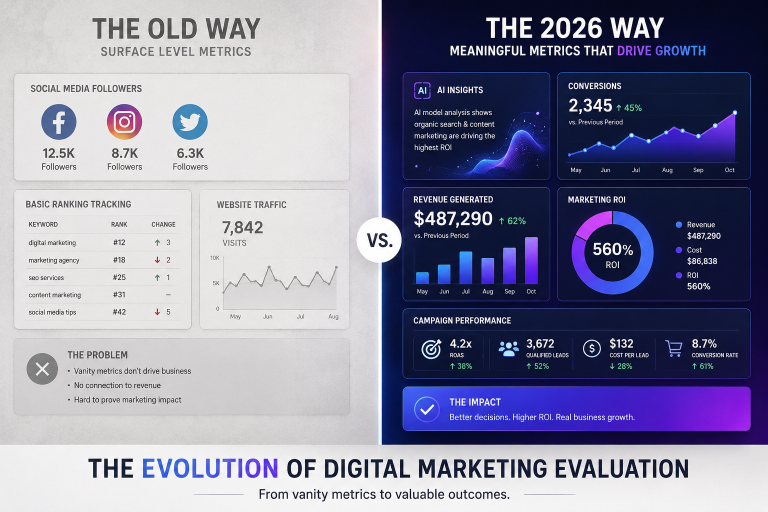
Focus on metrics that directly correlate with business outcomes rather than technical performance indicators. Customer satisfaction scores, response time improvements, conversion rate increases and cost per acquisition reductions provide clearer ROI pictures than algorithm accuracy rates or processing speeds.
Establish baseline measurements before implementation and track improvements quarterly rather than monthly. AI solutions often require 3-6 months to demonstrate optimal performance as systems learn from data patterns and user interactions. Track both quantitative metrics and qualitative feedback from team members and customers to ensure comprehensive performance assessment.
Common Measurement Mistakes to Avoid
Avoid the temptation to measure too many metrics simultaneously, which can obscure actual performance trends. Focus on 3-5 key indicators that align directly with your implementation objectives. Additionally, resist comparing AI performance against perfect theoretical outcomes rather than realistic business alternatives.
Many businesses make the mistake of expecting linear improvement patterns when AI solutions often show exponential gains after initial optimisation periods. Allow sufficient time for algorithms to learn from your specific data patterns before making major adjustments or abandoning implementations prematurely.
Protecting Your AI Plan for 2026 and Onwards
Emerging AI Technologies on the Horizon
Conversational AI and large language models will become increasingly accessible to growing businesses throughout 2026, offering opportunities for sophisticated customer interactions and content generation. Voice commerce, visual search capabilities and augmented reality experiences will create new touchpoints for customer engagement and sales conversion.
Prepare for these developments by ensuring your data infrastructure can support multimodal AI applications and your team develops skills in prompt engineering and AI content management. Consider how emerging technologies might enhance your current offerings or create entirely new revenue streams.
Building Scalable AI Architecture
Design your AI infrastructure with scalability in mind, choosing platforms and partners that can grow alongside your business needs. This includes selecting cloud-based solutions that offer flexible pricing models, APIs that support custom integrations and vendors with proven track records supporting growing businesses.
Consider partnerships with established digital marketing agency providers who specialise in AI implementations for businesses in your growth stage. Leadtap’s experience with AI-powered marketing solutions can accelerate your implementation timeline whilst avoiding common pitfalls that delay ROI realisation. Frequent plan checks make sure your AI path changes with market openings and technical progress.
The future of AI solutions lies not in replacing human creativity and judgement, but in augmenting capabilities and eliminating routine tasks that prevent teams from focusing on strategic growth initiatives. By following this structured approach to AI implementation, your growing business can harness these powerful technologies whilst maintaining the agility and customer focus that drive sustainable success.
Successful AI implementation isn’t about adopting every new technology – it’s about strategically selecting solutions that align with your business goals and growth trajectory. Start with the foundational elements outlined above, focus on measurable outcomes and build gradually toward more sophisticated implementations. With proper planning and realistic expectations, AI solutions can become powerful drivers of efficiency, customer satisfaction and competitive advantage for your growing business.
Ready to begin your AI journey? Contact our team to discuss how tailored AI solutions can accelerate your business growth without the typical implementation headaches.